



The lifecycle and sustainability of mail

Mail often begins its life in the forest
If properly managed, forests play an indispensable role in mitigating climate change and conserving biodiversity. They protect soil and water resources, provide livelihoods, and contribute to the wellbeing of rural and urban communities. This is where mail typically starts its life - the tiny fibres of paper made from sustainable forests in Europe.
91% of our raw materials1 are sourced in Europe and certified as sustainable. Several schemes exist to ensure forests are sustainably managed. The two most recognised are the Forest Stewardship Council (FSC) and the Programme for the Endorsement of Forest Certification (PEFC).
These schemes have similar objectives: certifying responsible forest management, conserving the natural habitats of plants and animals, and respecting the rights of forestry workers and local communities. Both track wood and wood fibre through every step of the supply chain, from the forest to the end-user. 90% of the wood fibre for the region’s paper mills is sourced in European forests. These forests are growing in size by 1,500 football pitches every day2, reinforcing the regenerative aspect of forestry.

From forests to paper mills
Paper production has come a long way. For years now, paper mills have been powered by biomass boilers and biogas derived from production, meaning they generate energy independently from their own waste. Many are further reducing energy demand (and thus lowering carbon emissions) by adopting high-temperature industrial heat pumps. Some mills are even feeding surplus renewable energy back into the grid.
Water usage is also a crucial component of sustainable production, and today, advanced filtration and treatment allow modern plants to reuse up to 95% of water.3
The European paper industry continues to pioneer new technologies to lower its environmental impact - and that is not where innovation stops. 70% of the fibre used to manufacture paper and board in the UK is derived from recovered paper, making the industry highly circular and reducing the need for virgin pulp.

Print Innovation
Once paper is sourced and manufactured sustainably, the next part of the journey for mail is what is printed on the paper.
This is really a critical part of the journey, because petroleum-based components can be replaced with more sustainable alternatives such as water-based coatings and vegetable-based inks.
Innovations like waterless printing and energy reduction technologies such as LED UV technology for instant ink curing are helping to reduce overall carbon emissions from production. LED UV technology typically consumes 70–90% less energy4 for ink curing.

Sustainable delivery
And finally, mail has to make it to your door.
Royal Mail is rapidly decarbonising its distribution fleet, switching to renewable energy and using more electric vehicles. But the backbone of this low-carbon network is the 85,000 postal workers who collectively take up to a billion steps a day. With 50% of all delivery routes performed wholly or partially on foot.
Postal workers already visit nearly 32 million addresses, so increasing the amount of mail per stop does not require additional vehicle miles. This "last-mile density" ensures that every journey is as productive as possible, reducing the carbon cost per individual item delivered. In addition, modern route optimisation ensures these workers follow the most efficient paths, further lowering the network's overall energy demand.

As of late 2025, Royal Mail has deployed 8,000 electric vans, maintaining the UK’s largest electric delivery fleet. Nearly all these vans are charged on-site using 100% renewable electricity. To navigate tight urban spaces and further replace traditional diesel vans, a fleet of over 100 micro-EVs has been introduced. These small, specialised vehicles save roughly 242 tonnes of CO2 annually by replacing larger, less efficient counterparts.
Royal Mail has also introduced its first fleet of 42-tonne fully electric HGVs for "middle-mile" deliveries, including mail. For longer routes where electrification is still scaling, the heavy fleet utilises 27 million of litres of Hydrotreated Vegetable Oil (HVO), a renewable diesel alternative that reduces direct carbon emissions by up to 90%.
Learn more about the Royal Mail Steps to Zero strategy.5
Circularity Through Recycling
But the journey doesn’t end with delivery.
Paper is one of the world’s most recycled materials.6 Recent government reports noted that the UK recycling rate for paper and cardboard reached 86.4% in 20247, significantly outperforming plastic, glass, and metal.
A single paper fibre can now be recycled up to 7 times before it becomes too short to bond, at which point it is often composted or used for specialised products like animal bedding or egg boxes.
The UK's "Simpler Recycling" legislation, in effect since 2025, has standardised recycling across all local authorities, ensuring that mail—from envelopes to brochures—is collected consistently and processed efficiently.
Recycling is well understood as a process to reduce waste, but much of what can be done to avoid pollution and lower the environmental footprint of mail comes earlier in the process.
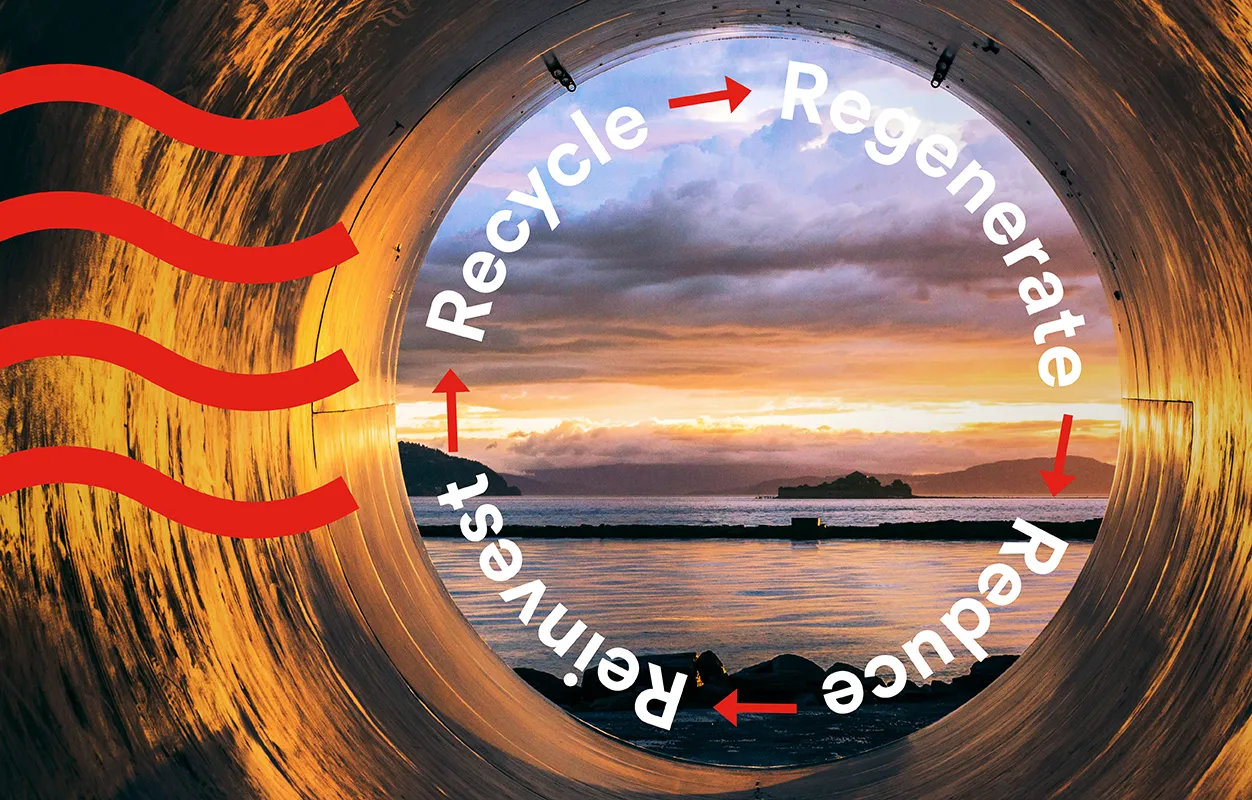
Waste must be eliminated by design. Using regenerative source materials, reducing carbon emissions through renewable power, reinventing traditional printing methods and ensuring products can be easily refurbished are all processes that reduce and contribute to a circular economy.
Mail producers are encouraged to design for circularity by using biodegradable vegetable inks and avoiding non-recyclable embellishments like glitter or certain laminates that could contaminate the recycling stream. Learn more about the sustainability of mail.
Drawing Inspiration

We have discussed sourcing paper sustainability, print innovations to reduce water and energy use, sustainable inks, more sustainable deliveries and - at a macro-level - designing for circularity. And it’s worth remembering that the life of mail often starts in the forest: it is here that we can draw inspiration.
In nature, things regenerate and this is a process of renewal and restoration. We are too detached from these processes which lead to waste, pollution and countless issues for human health and wellbeing. But innovations provide hope alongside regulation and a reliance on the processes that occur in nature, from regenerative forestry to algae inks.
The life of mail shows how it can be a more sustainable option when responsibly sourced, designed and recycled, supporting brands' wider sustainability strategies while playing an effective role within their marketing mix.


