



Printing green: how collaboration and innovation are driving sustainability across the print industry
How does the print industry, indeed any industry, become more sustainable? It requires two things: innovation and collaboration.
- The innovation to adapt and learn, to be progressive and not stand still – asking if a process can be more efficient, cleaner and even fully circular.
- Collaboration is critical because a business cannot be ‘sustainable’ all on its own. All parts of a supply chain should work together. And to accelerate change, the network effect plays its part both in education and inspiration.
In this blog let’s look at both things.
First where innovation is accelerating sustainability within an industry committed to environmentally friendly practices.
Second, collaboration through initiatives and industry bodies.
I will introduce what BPIF, the leading trade association for British print, is doing. And then, PrintGreen, a non-profit UK industry body launched to champion the sustainability of the print industry - providing the tools and data to help brands and agencies understand and reduce the environmental impact of their printed campaigns.
The print industry and sustainability
For the print industry, sustainability has been a central pillar for a long time. And today, most carbon emissions only come from the production of the material you're printing on - paper, plastic, metal, or glass - that receives ink, coating, or lamination. In the case of paper and board, these materials are renewable and highly recyclable. And the industry has gone much further than simply looking at carbon emissions that result from the production of raw materials.

Advancing sustainability
There are many innovations in the print industry we can point to ranging from biodegradable inks to machines powered by renewable energy. And here is one example of a print company advancing sustainability. We believe everyone in the industry can follow this lead and go much further.
Impress Print Services1 is one of the UK's most sustainability-advanced print companies and a BPIF Seal of Excellence recipient.
Their key achievements include:
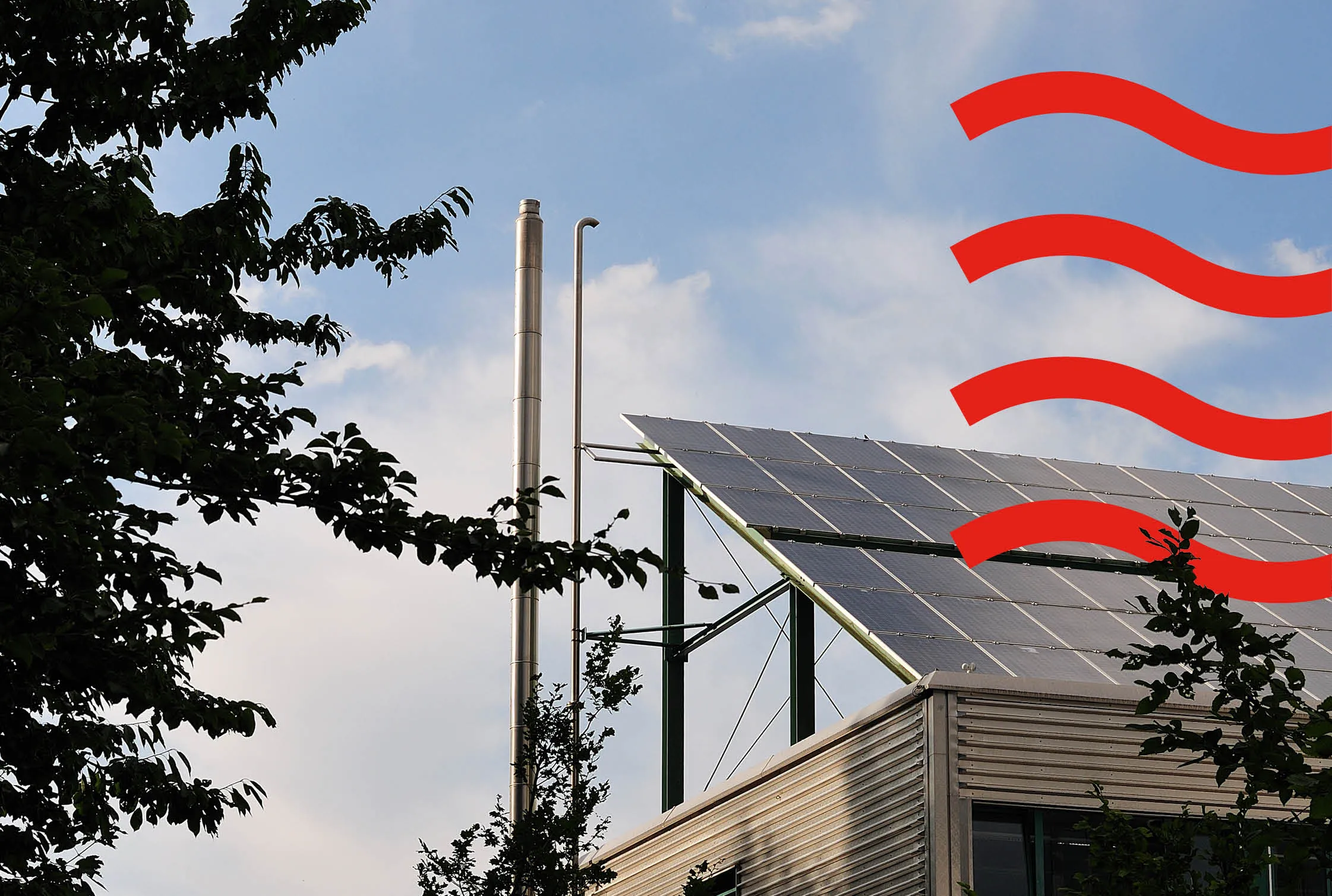
- 381 solar panels2 installed on warehouse rooftops, with the mailing house running entirely on solar power — producing an estimated 120 megawatts of clean electricity per year.
- 70% of the company fleet3 is now electric (up from 52% in 2021), with a target of 100%.
- LED lighting installed throughout, reducing lighting energy consumption by 70–80%.4
- Zero-waste-to-landfill policy in operation.
- Vegetable-based inks adopted as standard since 2001.
- 5,514 tonnes of carbon5 protected through the World Land Trust's Carbon Balanced programme, preserving 595 acres of critically endangered forest.
- First UK printer to achieve Planet Mark certification.6
Impress also became a certified vegan printer — a decision that opened new market segments and reduced Scope 3 supply chain emissions simultaneously.
One could argue, where we’ve seen the greatest innovations are in ink and there are many examples:
- In large-format printing, latex inks — made of approximately 70% water — are becoming the standard eco-friendly alternative to solvent-based products. These inks sit on the surface of the substrate rather than penetrating it, making the printed material easier to recycle. Under the right conditions, latex inks can biodegrade at a rate comparable to a leaf.
- At the cutting edge of ink innovation, companies like INX International7 are developing natural-based UV inks formulated with 50–90% renewable ingredients, delivering carbon emission reductions of 25–30% compared with conventional inks — without compromising print performance.
- Digital toners are also evolving. Sustainable Print8 in Kent, for example, uses toner partly derived from plant-based biomass (organic matter) to reduce energy consumption during manufacturing and use.
BPIF (British Printing Industries Federation)
You might think that these technologies are on the outer edge but investments in sustainability across the print industry are long standing and supported across the market.
At British Printing Industries Federation (BPIF),9 the leading trade association for British print, we found that 83% of members are working to reduce their overall carbon footprint across their supply chain. In terms of sustainability related investments, 77% are investing in waste reduction, 65% in electric vehicles, 59% in energy optimisation and 54% in solar panel installation. (Source: BPIF Printing Outlook Research).10
And BPIF supports its members in many ways which reflects the industry’s leadership in being more environmentally responsible.
Here are some of things that we offer our members:
- The Environmental Road Map:11 A structured self-assessment and improvement framework allowing member businesses to evaluate their environmental performance, identify gaps, and work towards recognised best practice.
- The Environmental Forum:12 An industry-wide network where members share best practice, discuss legislation, and collectively raise environmental standards.
- BPIF Environmental Seal of Excellence:13An independently audited accreditation that recognises members meeting the highest standards in environmental performance, health and safety, and human resources.
- Government Lobbying & Policy Influence: BPIF actively engages with policymakers to ensure the industry is fairly represented. Its 'Priorities for Print 2025–27' 14document directly challenges myths about printing's sustainability credentials.
BPIF also provides its members with an easy-to-use Carbon Calculator, ClimateCalc.15 This enables members to measure their site carbon footprint and start their journey to emissions reductions and net zero, as well as offering their customers a carbon footprint for all the jobs they supply.
PrintGreen
BPIF is also a major part of a sustainable industry body called PrintGreen.16
PrintGreen brings together key stakeholders in the sector to ensure that those considering print and mailing in their marketing and communications can easily understand all environmental impacts. It provides education, best practice, and tools to help brands and agencies produce print and mail campaigns more sustainably. Currently, their work includes:
- Promoting print as a naturally renewable, recyclable, and low-carbon medium that supports regenerative economic models.
- Countering common misconceptions and unfounded "go paperless" claims.
- Standardising emissions measurement across the entire media channel, from production to deployment.
- Empowering informed decisions: by offering a free carbon calculator17 (developed by CarbonQuota). This allows organisations to precisely assess and manage the carbon footprint of their print projects. The latest functionality allows buyers to assess carbon per impression and carbon per commercial action.
PrintGreen is only at the start of its journey and envisions a future where the whole print industry is actively supporting a circular economy and offering low-carbon solutions. This will build the print industry’s already strong reputation as an environmentally conscious form of communication.
More critically of course sustainability is a business imperative at a time of heightened regulation, consumer demand, and global issues of waste, pollution, biodiversity loss and climate change.

Sustainable Print
From the examples and initiative above we can see that the print industry's story is one of continuous development, measurable progress, backed with data accelerating year-on-year.
And what has been missing is a voice that communicates this effectively to the brands, agencies, and buyers who commission print. That is precisely the gap that PrintGreen was created to fill. BPIF, meanwhile, continues to provide the structural backbone.
Together, these bodies represent something important — an industry that is not waiting to be regulated into sustainability or resting on its laurels - but actively choosing to accelerate change through innovation and collaboration. For brands and print buyers, the message is clear: the support, the community, and the tools are all available.
To find out more about the sustainability of print - and crucially how you can start producing more sustainable mail campaigns today - visit PrintGreen.18


