



The quiet transformation of mail

Picture a direct mail campaign - go on.
Most marketers see the same thing: big volumes, long lead times, creative signed off weeks ahead, a cost paid up front and a result that arrives later and can be difficult to unpick. It is something you commission a few times a year and otherwise forget about.
Hold that picture. Then date it. It’s about fifteen years old.
Here’s the part that gets missed. Mail didn’t spend the last decade trying to copy digital, it quietly joined it. Today, a piece of mail runs on the same customer data, the same triggers and the same workflow logic as every other touchpoint in the plan. Email, SMS, WhatsApp and physical mail now answer to one shared system. Mail is, in every meaningful sense, already digital, just rendered on paper and posted through a door - and the change that made it possible was almost invisible by design.
Behind the scenes
Over the past ten years, Royal Mail rebuilt the plumbing. Addresses now validate against a single authoritative file, so a mailing reaches real, current households instead of a decaying list. Items carry machine-readable barcodes, so they sort themselves through the network and report back as they go. Live mail tracking now gives every mailpiece its own unique identifier.
Individually, each of these is an unremarkable operational upgrade: sorting, barcoding, addressing, tracking. None of it made headlines. Collectively, though, it transformed what the network can do: a logistics network with a programmatic front end. That matters because modern marketing increasingly depends on channels working together, sharing data and responding to customer behaviour rather than operating in isolation.
Take the humblest part of a mailing: the reply. For decades, if you wanted a response, you printed a business reply envelope, folded it into the pack, and paid for the privilege of the return journey. Today, that envelope is increasingly a QR code in the corner of the page. Scan it and you land on a page that already knows who you are, with details filled in and nothing to type.
It can confirm an address, capture a response or carry someone straight to the next step, and because it is digital from the moment of the scan, it quietly reports back. You now know whether the piece worked, who acted on it and what they did next. A reply that used to be paper, postage and guesswork is now a tracked, personalised hand-off from the letterbox to the screen, with the physical and digital stitched together in a single tap.
Evidence changes everything
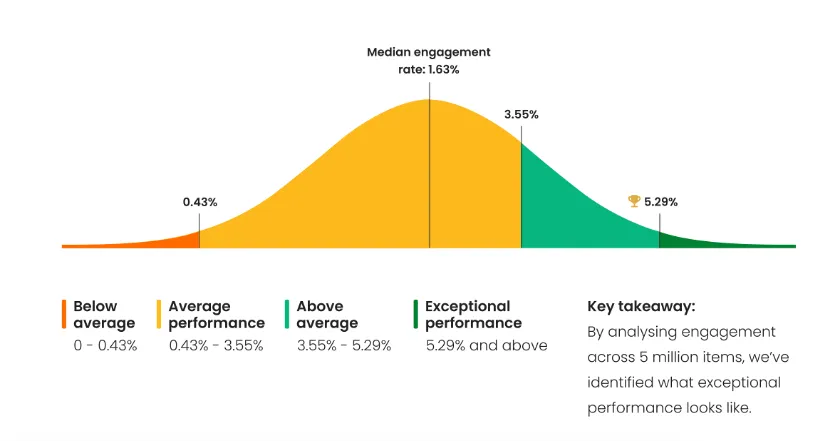
The strength of this approach is that, because the reply is digital, it becomes countable at a scale the era of print and pray could never have managed. Pull the QR scan data from five million mailpieces, as Stannp.com did across its platform, and mail can finally answer a question it could never answer before: what does a normal response actually look like?
The median mailpiece sees a scan rate of 1.63 percent, and anything above 5.29 percent is exceptional. A reliable benchmark like that would have been guesswork a decade ago. It is another sign that mail has shifted from being a channel judged largely by instinct to one increasingly judged by evidence.
The same measurement that produces a benchmark also lets you beat it. This is where the email playbook applies directly. Subject line testing is second nature to every email marketer: run several versions, see which one lands, keep the winner. That discipline now works on paper. When the fitness brand Equinox tested four versions of one mailer, changing nothing but the wording of the call to action beside the QR code, the best line drew more than ten times the response of the weakest. Same audience, same design, same offer – the only variable were the words beside the QR and the difference was plain to see in the data.
One connected journey
The things that made mail feel like a separate discipline have largely fallen away, for example, take targeting. Specific methodologies such as data-driven microtargeting came to public attention during the Brexit campaign, but they are now standard practice in digital advertising. These messages are built for a narrow audience, or even a single person, and now mail can do the same.
A mailing can be aimed at one household rather than a broad batch, drawing on the same data that powers a hyper-targeted online campaign. It can be planned, optimised and measured to a standard any performance marketer would recognise, and it can become one connected step in a longer customer journey rather than a one-off event. In that sense, mail no longer sits outside an integrated communications strategy. It reinforces it. What that looks like in an always-on world is a subject in its own right, and a later piece in this series explores it properly.
What has not fallen away is the bit that made mail worth bothering with in the first place. It lands somewhere that has gone strangely quiet. It is physical, so it gets handled rather than scrolled past, and it tends to stay.
Independent research from specialist sector JICMAIL clocks the typical dwell time in the home at around a week, with people returning to the same piece more than once. Indeed, digging further into its in-depth analysis, the average piece of direct mail is looked at for 141 seconds across the course of a month, while the average door drop is viewed for 57 seconds.
That kind of sustained attention is becoming increasingly scarce across media. For all the advances in targeting and measurement, marketing still depends on people noticing, remembering and acting. So, the undeniable fact is that mail has gained the data capabilities of digital – without surrendering the characteristics that make it unusually effective at capturing attention and building memory. This transformation did not replace mail's strengths with digital habits, rather it preserved the strengths and added the habits.

A different standard
For a marketer, what matters is not necessarily the technology, but what it now makes possible. Mail can now be turned around in days, rather than booked weeks ahead, so it can respond to a campaign instead of sitting outside it. It can also be aimed and personalised, so budget reaches the households most likely to act rather than a broad list.
What is also critical to understand is that it can be measured, so it earns or loses its place on the media plan on the same evidence as every other channel. In a world increasingly focused on effectiveness rather than simply efficiency, that changes the conversation entirely.
What is also important to consider is that the criteria modern marketers apply to everything else – agility, relevance and efficiency – can now also be judged and evaluated for mail. It is the same logic that earned retail media its place on the media plan, which is another data-led, addressable, measurable channel that marketers reappraised once the evidence became impossible to ignore.
Seen in those terms, the familiar objections to mail – the lead times, the minimum volumes, the question of whether it is worth the effort – describe a channel that no longer exists. The more useful question is not whether mail still has a place on the media plan. It is whether you are still judging it by what it was, rather than what it has become.
The author, Sam Heaton, is CEO and co-founder of Stannp.com, a SaaS platform serving 90,000 companies across the UK, US and Canada to create, personalise, automate, send and measure direct mail campaigns at scale.
Continue the series:
The story doesn't end here
So what made this transformation possible? Much of the answer lies in technology that most marketers never see. In the next article, Chris Minn explores how print-on-demand helped turn mail into a more flexible, responsive and connected channel.
Read next: Print-on-demand: the engine behind connected mail


