



Smarter targeting led to less waste and bigger Impact


Background
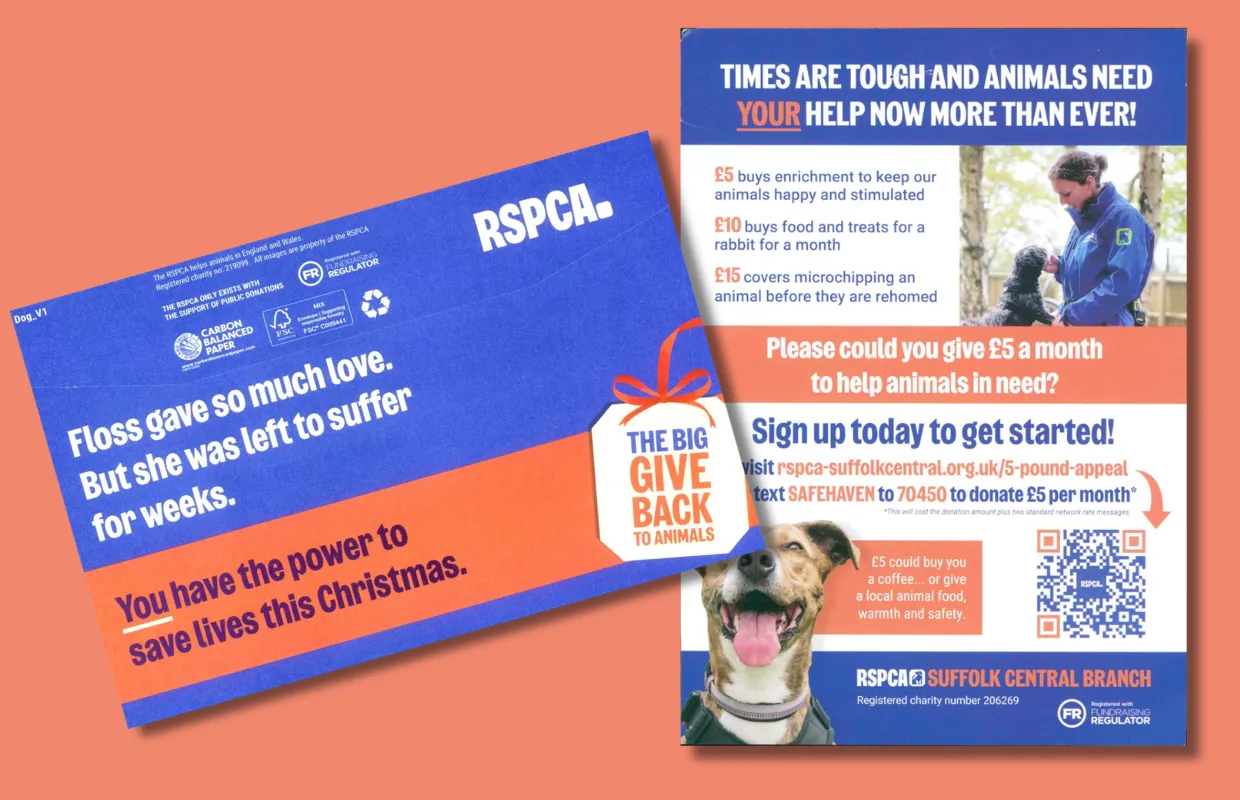
The RSPCA, the UK’s oldest and largest animal welfare charity, relies heavily on donations - especially during Christmas, a key fundraising period supporting its £140 million annual costs. Their 2024 Christmas campaign aimed to boost income while reducing environmental impact and wasted outreach.
The RSPCA was already committed to sustainable practices, using carbon-balanced, FSC-approved paper and vegetable-based inks, but wanted to go further by ensuring their campaigns reached only those most likely to donate.
The aim: to hit their income targets and reduce waste.
Solution
RSPCA worked with Join the Dots and Whistl to optimise the campaign by pushing the boundaries of targeting efficiency. A new approach was tested with Herdify – an AI Audience targeting tool that combines an understanding of consumer psychology and a brand’s first party data, which locates real-world, word-of-mouth engagement.
Herdify helps charities attract and convert new donors by tapping into the influence of real-life social networks. An estimated 95% of us trust our friends and family more than ads. But most of those genuinely influential conversations happen offline, making them tricky to measure. Herdify’s behavioural modelling identifies the postcode areas where these offline conversations are likely to be happening and help to target those communities more effectively. By integrating Herdify into their standard door drop model, RSPCA believed they could reduce waste and zero-in on the potential donors most likely to respond.
The starting point was to build a model using RSPCA’s existing donor data, enriched with insights from Mosaic and TGI. This helped rank postal sectors based on their alignment with past donor profiles. Then, using Herdify, an additional layer was overlaid that highlighted strong word-of-mouth communities - areas with the highest potential for social influence. By overlaying these two models, the charity was able to select the most promising mailing zones and remove any postal sectors that did not have a high index or Herdify score against the models, minimising wastage.


Results
RSPCA’s Herdify test was a clear win. High-scoring areas saw better response rates, higher average donations, and ultimately a lower cost-per-donor with stronger ROI.
The campaign delivered:
- Nearly £320,000 income
- 8,381 donations through door drops alone
- 200,000 fewer door drops printed compared to 2023 but with an uplift across many key metrics
With this approach, RSPCA reduced physical waste by only targeting people genuinely interested in RSPCA, rather than blanket mailing larger areas. It marked an important step towards sustainable, data-led fundraising.
Not only did the charity improve targeting but they obtained powerful insights to shape future campaigns.
Source: DMA Award Winner 2025. Sustainability.