



Jo McClintock, VP of Brand & Marketing at Trainline - transcript
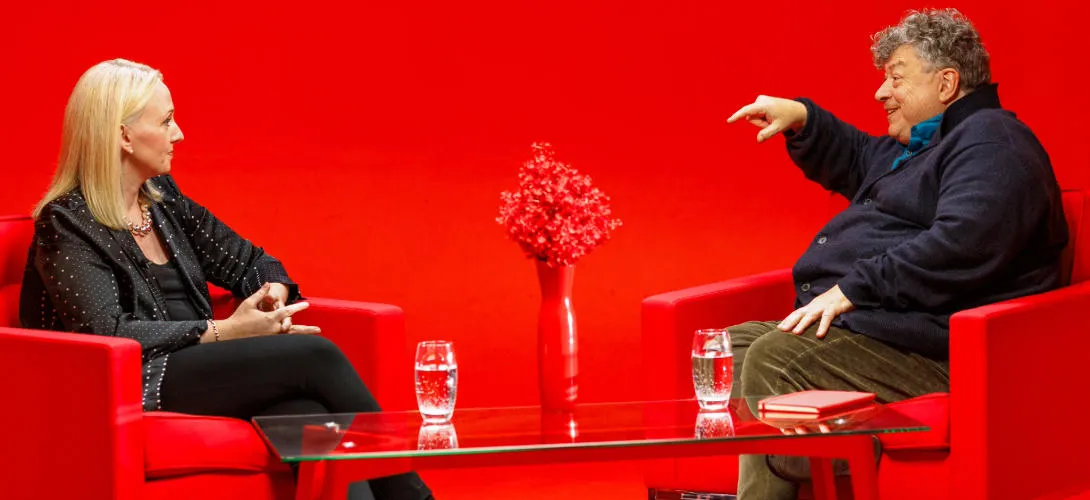
Rory
So welcome to another episode of Man Unleashed, which is brought to you by Marketreach . Who are the great, evangelists for the male medium? I'm delighted to be joined today by Joe McClintock, who's I think VP of marketing and brand for, Trainline, as it is now called, not the train line for anybody who wants to buy a ticket, just trade line. And, you've had a fantastic career, I think. Talk us through it because you started at Screwfix. So you've had and you've also been at Moonpig. So your career has actually been involved in other postal or catalog businesses to an extraordinary extent. How did you first get into marketing? Actually.
Jo
It was at Screwfix. And ultimately that was a direct mail business in terms of marketing. We basically sent out about 25 million catalogs every year, to tradesmen across the UK and DIYers. And my job was to figure out who to send it to. I mean it was my early twenties. I mean that’s a long time ago now. I think it’s about five years. And it was generally it was my first start on marketing. I remember the CEO said to me. Okay weare going to take you out of logistics. Which I was doing some work in. Im going to put you in marketing. And you are going to figure out how do to the segmentation of our catalogues. And I was like, what is segmentation? You know, I had no idea.
Rory
Do you have a math background?
Jo
Not at all. Absolutely not. So, I mean, I'm generally someone who's pretty good at solving complex problems and getting to a simple answer. So it was an amazing, bedrock effect of my career going forward to think about customers and who they were, what they were worth, and ultimately what you should do to grow the business from that knowledge and understanding. So and for us, direct mail was the channel. It was the most important channel to our growth.
Rory
So interesting. So the mail catalog, I mean effectively at that time without that catalog you have I mean it is a retail business. So people do they know a lot about. Yes. Yeah. Well so you can either order things for in some cases same day delivery.
Jo
Yes. Absolutely. Well back when I was there says again a long time ago we just started the retail business. So I remember the headquarters is in Yeovil in Somerset and I'm from, from Somerset.
Rory
Oh, brilliant.
Jo
So ultimately that we had this one, shop that was attached to the side of the warehouse and the queues were enormous. And so you used to think, well, there's clearly something in this. Okay. And ultimately we kind of went on a journey where was I open seven stores and another eight stores and then another ten stores. And I think the interesting fact here is that, you know, the customer problem we were solving, the guys that plan, the guys that don't plan the retail operation. So for one and the direct mail business sold for the other. And that was what drove huge incremental growth for fiscal year.
Rory
So there was a chunk, there was a chunk of people who would effectively plan out the job. And everything would arrive by mail order at the address at the appointed time. And there was another group who'd either either had failed plan entirely or forgotten something.
Jo
And that market was with the trade merchants on the trading estate. And so for Screwfix, it was like, well, there's billions in that market that we couldn't access. And ultimately it's because of trades and purely their operating habits with planning jobs, etc. they always forgot something.
Rory
And they started a mail. This is an extraordinary thing which is power of course that mail enabled these businesses to scale. Yeah. From often you know unlikely locations.
Jo
Yeah. It was literally it was screws. It was a one page catalog. It was installed in someone's back garden. And then it turned into sort of 3 or 4 pages on a direct mail business and a telephone business. And then it grew and grew and grew from there, which is, you know, obviously a hugely successful brand today. And it's international now as well.
Rory
Did you go straight from Screwfix to Moonpig?
Jo
Yes. Joined Moonpig, which was again a fabulous and is a fabulous business. So Moonpig is obviously a online, card and gifting retailer.
Rory
Fantastic business.
Jo
And when I joined, it was going through it's like, where are we taking this? Where's the next phase of growth? And for me, my job was to come in and give the brand some more meaning to effectively move us from a card business, to be seen as a gifting business, so people to buy more through Moonpig.
Rory
And it started in the UK, didn't it?
Jo
Yes, yes yes yes. A chap called Nick Jenkins.
Rory
I got to ask, why is it called Moonpig? I mean, it's one of those things where you no longer need to explain. We all know what Moonpig mean.
Jo
That was his nickname at school. Yes, he was called Moonpig.
Rory
So I would ask why I gave and so he just drew his school nickname and his idea was effectively highly personalized. Yes. Gifting.
Jo
He was a bit of a joker. Yeah. And he ultimately wanted to. He didn't quite find the perfect card to send his friend, for his birthday. And that was kind of what triggered the idea that maybe you could be a bit more personal when you're giving or gifting to people. And I think and that's, that's obviously the whole basis was around personalized cards. And I think the most wonderful thing and think about direct mail was in Moonpig is that people keep cards.
Rory
Yes. I don't know if you've got many cards you've kept keep him. Yeah. I mean, my wife's more assiduous than I am, but but yeah, yeah.
Jo
So of all the mail you receive, it's pretty unlikely for you to keep anything but something that's super meaningful that someone sent you. That's either highly personalized or they've written a note in it. And that was the real beauty of working with a product that people, you know, kept. And it was in a box in a drawer under their bed or something along those lines.
Rory
And actually, of course, the personalization just adds hugely to the value. So the capability of something that's been personalized to you.
Jo
You developed the most extensive range for that, those close relationship goals, cards, gifts and then a, a UX and a product that actually brings that to life in the way that people want to give. And then ultimately, when it goes out to customers, when it lands on their doorstep, you know that moment where you pick up the letter and the card, you know that what you said, that individual is the most personal thing it can possibly be and the most special moment. So that for me was like a real beautiful direct mail moment that we knew that everything we did around the product, the customer, and what landed on the doorstep was actually the most perfect gifting moment.
Rory
But you also had a very interesting ambition, I suppose, in that when you've reached a customer and they have effectively a circle of 5 to 10 people to whom they said yes, then you can reasonably assume you've kind of left. You reached the ceiling, maybe you can extend a little bit further. Yes. But in a sense then and then the whole idea is it moves on to the next, yes, the next person to kind of network on that.
Jo
Absolutely. And that was we did that through reminders. So ultimately within the product or the app you can set reminders for people's birthdays. Yeah. And that really drove that sticky flywheel. Will people coming back because you keep reminding them and offering them discounts etc. And the other key part of the flywheel was on every single card that went out that landed on your doorstep.
Rory
Of course.
Jo
We'd offer them the ability to send a free thank you card, so they were always a note that says, if you want to like re gift or re send a beautiful note, say thank you for this. And that was there for free
Rory
And that of course you're quite a new customer. It's very similar Hotmail of course, famously grown and you know, they simply put a little line at the bottom of every single email. I think they reached 80 million people with no marketing.
Jo
Yes it was obviously it's a physical business. It's ultimate. You're getting something through the letters of yes or email or a gift. But it's, you know, also highly digital. And that was the beauty of Moonpig. Like, that's why it's done so well. And it will continue to do extremely well as people. Kind of the business understands what people are willing to pay for gifts or how far they're willing to go, or how personal.
Rory
It's a funny thing I always make this point that nobody would invite someone to their wedding by email. Or you might do, but then people would assume it's a cash bar so they wouldn't come. And similarly, you know, people do send me digital birthday cards, but there's an element of that. Come on.
Jo
You didn't try very hard.
Rory
Yeah, I mean, I actually I've always wondered whether Amazon has a problem in gifting precisely because it looks a bit lazy.
Jo
Okay, that's so funny. You say that we actually surveyed effort versus relationship. So we actually looked at what effort you would go to versus different people in your life. I do think there is within the kind of marketing mix, as it were, when I look at sustainability and I look at trying to, at the end of the day, you're trying to change habits. Yes, trying to move people around. We've got to try everything. And direct mail absolutely is part of that repertoire because as we've talked about, you know, it's something usually that sticks around, sticks around. Yeah, on the tabletop or somewhere in the home. And it's a constant thing that you might look a look at or come across. So for me, when it comes to sustainability, you're in the job of changing habits and travel. So it's whatever medium does the best job in doing that. So it could absolutely be a successful part of the marketing mix.
Rory
Bringing your moonpig experience to the fore. Do you have any plans to actually, you know, bring train line? Because I think there's a very, very strong cultural thing, which, as you said, I think derives from Google, which is it's not only digital first, it's digital only in many cases. And actually, one of my great triumphs was persuading Google to launch something by direct mail, which, and my argument was it's look, it's not it's the kind of decision which requires people, requires some solid material thing that will stick around, that gives them time to think. And, you know, it. Would it be worth testing, for example, door drops or mailings to in particularly in areas of the UK where rail use is really low.
Jo
I think. And then as you said, I think for digital brands quite often they go out with Google. So you're in this default mindset where digital channels are likely your first port of call, or more physical channels like out of home, for example. I think the interesting thing you could look at when it comes to a digital first business is like hypotheses around really tricky customers or really tricky scenarios.
Rory
So one thing I've noticed is there's this belief that, for example, digital, because it's more efficient, has to be more effective, which I don't think is always true. And there's also this belief that paper is somehow environmentally less sustainable than anything digital, whereas it's, you know, it's not as if server farms necessarily get carbon neutral. But I mean, interestingly, I mean, the, I think Argos largely got rid of the catalog for environmental reasons. And the problem is actually, if you look at it in reality, papers nearly all produced from renewable sources, better known as trees, it's generally trees that are grown for the purpose of turning into paper. And I think it's also direct mail is the most recycled medium. In other words, nearly everybody does the right thing with it, and it does end up being recycled, which isn't true of plastic bottles. For example, if they're recyclable, where they end up is anybody's guess. Yeah. And so there is I think you're obviously right in saying that if you've grown up as a digital business with Google, you're in danger of defining your target audience in a sense, not by where your potential audience could be, but simply by trying to amplify the audience that digital has already given you. And so you'd see probably direct mail as an opportunity to branch out and reach people who fundamentally, the parts that digital doesn't reach in a sense.
Jo
So I think direct mail not necessarily looks at new audiences, potentially. I think most audiences are in a digital ecosystem of some way, shape or form. I think what direct mail can do potentially, depending on your objective, is to attack a problem or come at problem in a different way. So maybe it's something that actually drives up consideration more because it's something that sits in your home. It's something you review. It's something you might just kind of actually browse through. I think it's a different medium in which to reach the same audiences. And I guess, again, from somebody who's in digital, it's about testing some hypotheses around how that might help your objectives. As an example.
Rory
And I suppose in the case of the season ticket problem, it can be timely.
Jo
Absolutely.
Rory
So you can reach someone at exactly the right moment. Yes. And so I would think that there are two questions and add answers. One of which is why us and the other one is why now? Yes, I'd actually direct mail seems to answer that. Why? No question. Really? Well, because it arrives as a one off high impact communication.
Jo
Yeah, yeah. And I also think to your point around, sustainability angle, I think again, it can be easily you can easily discount direct mail because of, preconceptions over paper and ultimately and all of that. But again, if you have an objective like we have around trying to drive people out of cars and planes, which are about 70% more polluting, of course, if direct mail does a better job at doing that, why wouldn't you do it? And ultimately net net, it's going to be far better, improving carbon emissions impact than, you know, being concerned about the the impact of, paper, on some of these doormat.
Rory
Well, Joe, it's been absolutely fantastic having you here. It's been absolutely wonderful to have you on the podcast. So anyway, this has been Mail Unleashed, brought to you by market rates, two of the great evangelists for mail use, use of the mail medium. It's been a huge pleasure to have Jo on the show. And if you've enjoyed this, you can find plenty more episodes by visiting marketreach.co.uk. Here's till next time. Thank you very much indeed.